Showing posts with label Canada. Show all posts

Saturday, 24 June 2017

The three week gardener

Returning to Ontario for a 3 week stint, I am amazed at how the garden holds together with only a few hours of work each June.


Admittedly not many people would covet the plants that are the backbone of the flower garden, but each year they put on a show that starts in the spring and lasts all summer.
My secret is to have planted a lot of thugs in the garden and as they fight it out with each other there isn't much room for weeds to move in.
In June I have columbines, hardy geraniums centaurea and iris adding a dash of colour both in the garden and in the vase
As I am about to abandon the garden again for another year I notice that the evening primrose, perennial sunflowers and spider plant are about to bloom, and in a few weeks the bee balm, black eyed Susans, lilies and hollyhocks will fill in with phlox following close behind.
To fill in the gaps with interesting foliage there are clumps of hosta and cimicifugia(black snake root) and don't under estimate the power of the rhubarb foliage. Mine grows enormous.
The veg garden of course isn't producing a lot but there are herbs - thyme,chives and lots of self sown parsley.
Some old sugar snap pea seeds I planted last year for a green manure have self sown and we have manged to harvest a few peas from them. And the rhubarb has produced many fine deserts.
I spent a few hours weeding the vege garden. I left the self sown parsley seedlings in place as well as a few columbine and hollyhock seedlings. The rest of the space I planted some extra pea, bean and sunflower seeds. Any other bare areas got a sprinkle of some buckwheat seeds I had around.
I am hoping that once again this small amount of work will take the gardens through another year....til I return next June.


Sunday, 31 May 2015

Back in BC

We have arrived in British Columbia.
The sun is shining and spring is under way. In a few days we head up to Malcolm Island and see the property we have just bought. The container of our stuff will be following us. All very exciting.


OK this colourful lizard isn't from BC. He was visiting my garden in Thailand the day we left.


We hooked up with our camper in Victoria. It wintered over with our friends Scott and Andy.
The next day we were out in the boat checking out Scotts shrimp traps. It was a successful haul.


I did like the raised beds on the dock filled with veges.


 Veges in a bath tub also.


In a few days we head north to Malcolm Island and all that will offer us.

Friday, 29 May 2015

Looking forward to a new season

Having given up my garden in New Zealand and then spending so little time in Thailand, I am really looking forward to getting back to my Ontario garden.
Here are a few of the things I can expect this summer there.


Tuesday, 9 September 2014

Better late than never

Sometimes I wonder when I get the garden up and running late in the season as I did this summer in Canada whether it is worth the effort of getting organised, getting the seedlings started and pampered and in the ground knowing that there is a likelihood of not getting any results in the short season we have here.
But the joy of eating home grown, non sprayed veges just minutes after harvesting makes it seem all worth while even if the harvest isn't huge.
This summer I started harvesting from the vege garden just about as soon as I arrived. There were the self sown peas and lettuces and the perennial herbs-chive, oregano, parsley and thyme.
I also managed to scoop up a few tomato plants cheaply from the local nursery, that were ready to harvest almost from the time I bought them, and have continued to produce all summer.


This tomato bush has been producing for the last 2 months, but has finally just given up. Though there are still a lot left to harvest. Fortunately I still have more tomato plants just starting to ripen their fruit. They are in pots, so when the weather cools down I'll at least be able to move them to a sheltered area.


The jalapeno peppers and the cayenne peppers are starting to ripen in their pots. When we leave in a few weeks, I'll do my usual trick of putting them inside, in front of a bright window, and let them ripen some more, then dry down over the winter. They will then be ready to crush and store on our return next spring.


The beans and peas finally produced a largish harvest a few days ago and lots more on the way. I only need a few more weeks of frost free weather before we go to make those worth their while starting.


Even the zucchinis are starting to produce. The lettuce are continueing to produce. I did have a big failure with the pak choi when the slugs devoured the complete row early on in their life.
The root bound cucumber seedlings I picked up from the nursery on our arrival made a strong come back, and have been supplying our salads for the last few weeks.


This harvest made it all worth the effort. It made a healthy contribution to a dinner party we had a few nights ago.

Sunday, 3 August 2014

Garlic harvest

Like many others at this time of the year I harvested my garlic.
It is probably not such a grand harvest as others may have, but it took so little effort, it was like something for nothing.
Last September I left the garden here in Canada in the hands of my hubby. He is not exactly a gardener, but did enjoy the harvests late into the fall.
Then he left around mid October. On my instructions he took the left over garlic from the kitchen and spent a few minutes planting the cloves in a few empty spaces in the vege bed. That was it- until a few days ago when I went in and did the harvest.


There are 27 cloves of garlic! Some are a good size, some a little on the small size, but there is certainly enough to get us through the next 7 weeks that we are in Canada, and maybe even a few cloves to plant again so we can do it all over again.
This has got to be the best returns for effort.

Saturday, 26 July 2014

Mid Summer

It seems to be coming up to mid summer, though I'm not sure the weather knows. Is it me or are we having a lot cooler summer than usual.
The seedlings I planted out over the last few weeks are slow to take off. At this rate summer will be over before they mature.
But the lettuces are still producing. The self seeded ones that we came back to at the beginning of the month are starting to finish, but there are a lot more coming along to fill the gap.


The rhubarb is unstoppable, and the perennial herbs are loving all the rain we've been getting.


The flowers seem to be all blooming at once, so it is a riot of colour in the garden. I haven't had the hose out to water yet, and it seems like we are getting more rain tonight.


Thyme waiting for no-one, and new lettuce plants coming along.


Sunday, 13 July 2014

Lookin' good

We've been back only a week, but already the garden is looking quite respectable.
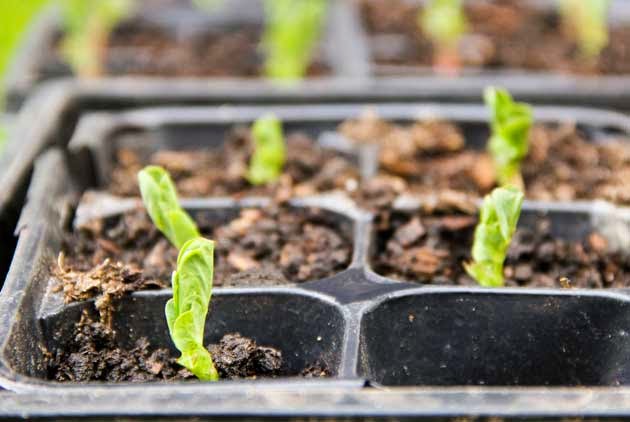
The seeds I've started have germinated, and some are big enough to get planted in the revamped beds.
As usual last years compost pile has become a new garden bed in the vege patch and the compost bins have been moved  to what will end up a new bed next year. This way I slowly expand the garden area with very little work on my part.
I slipped down the road to my friend Michaels, and gathered up a car load of saw dust from the mountain of saw dust he has accumulating from his wood working business.
This saw dust will go on the paths in the vege patch. The saw dust that was put on the paths last year has decomposed nicely, and that is scraped off and put in the beds as mulch. After a few years of this, the soil has become rich and good at holding moisture from the sometimes infrequent summer rains.


The beans and peas were planted out last evening to take advantage of the rain forecast during the night.
 

The heavy rains arrived on schedule, and the seedlings got well watered in.

 
I still have lettuce, squash and pak choi on the go, but so far they are too small to plant out. Maybe next week.

Sunday, 6 July 2014

Return to Canada

A few days ago we arrived back in Canada. After my sudden departure last September, with no time to get the garden organised for winter, I was a little worried about what shape it would be in now that we are so far into the summer here.
It was a pleasant surprise to see that it fared much better than expected. There are lots of weeds of course, but the flowers are blooming, and as I weeded the vege garden yesterday, I discovered lots of self seeded veges. A bonus for letting them all go to seed in the fall.


I was excited to find a couple of dozen lettuces of various types hidden amongst the undergrowth. Some are ready to eat, and others are only babies. I couldn't have planned the staggered growing better myself.
Also there are sugar snap peas and sno peas ready to eat, and lots of parsley scattered through out the garden.


The rhubarb is looking pretty healthy and it looks like we'll be getting lots of apples again this summer.


The flowers are looking great, and seem to have not suffered by the lack of cutting back last fall.


I am busy starting a bunch of seeds to fill in the gaps. It may be too late for some, but on the other hand if we have a nice warm fall this year, I may think I was pretty smart to have gone to the effort.
 

Saturday, 14 September 2013

Basil and Pesto

With a frost due any night in Canada it is time to harvest the basil, make a big batch of pesto and freeze the surplus.

 
For me the best way to preserve the basil harvest through the winter is to freeze it.
I do this by stripping the leaves from the stems and throwing the leaves in a blender with enough olive oil to make a puree.
This mix then goes into muffin trays to be frozen. I find that if I line the trays with paper, then once the basil mix is frozen I can remove from the metal trays and throw the frozen patties into a bag. Each time I need to use basil for cooking or pesto it is easy to take a patty of two out of the freezer to use. Or even cut a patty in 1/2 if necessary.
 
 
To make pesto, I don't really use a recipe.
I blend several handfuls of fresh basil with enough olive oil to make a puree ( or use a thawed basil patty or two)
Add a tbsp of nuts to the blender-pine nuts, walnuts or cashews.
Add a tbsp or more of grated parmesan cheese.
Add 1-2 cloves of garlic
Salt and pepper to taste.
Blend all together, and serve on pasta or use as a dip.
A nice variation to plain pasta pesto is to add a few raw diced tomatoes.
Top with more grated parmesan cheese.


Monday, 9 September 2013

Planting out seedlings

Now that there is a frost threat every few days, it is time to plant out the seedlings I have had on the go for the summer.
There aren't a lot. Two types of perennial Black Eyed Susan, and a really dark red Hollyhock.
The Black Eyed Susans are two that I grew in a garden I left last summer. One has a really big flower, like it is on steroids (could this be Goldsturm?), and the other is alot smaller and more delicate.
Also some Chinese garlic chives. It seems like the chives I transplanted didn't make it through last winter. The seeds must be a few years old, and I was surprised when they germinated so readily.
Here is a pic of the seedlings only a month ago.

 
They were looking a little on the small side then.
But here they are a few days ago, looking much more robust.
 I also took advantage of a sale in our local nursery and bought some Liatrus, Lavender, Sedum and Phlox.
 
 
They have all now found homes in the garden. It meant ripping some of the annuals out, to make room for them. Something I hate doing when they look so nice. However as soon as the threat of frost becomes reality ,they'll be toast anyway. Now the newly planted seedlings have a chance to develop a larger root system while the ground is still warm.
Looking forward to seeing them again next spring.
 

Saturday, 7 September 2013

Tuesday, 3 September 2013

Todays harvest

Wow, has it ever cooled down. last week we were all sweltering, and dare I say it, complaining about the heat. Today it is cold and grey.
So far the temps have stayed well above freezing, and not meant to go down below 6'C at night over the next few days, so hopefully the garden will keep producing for a while longer.

 
The tomatoes are all starting to ripen up. I think it is time to make a big batch of relish.
The summer squash which have been a little slow this year are finally producing steadily. these are yellow crookneck.
The edible podded peas have slowed down, but mostly because so many of them got too big to eat, and got left on the vine to ripen for seed and soups. I am growing sugar snap peas and sno peas.
The bush beans finished producing a while back and are now ripening for seed and dry beans for cooking. The purple podded beans are coming into their own, and I am able to harvest several large handfuls each day.
Still in the garden I have pak choi, and Chinese cabbage. Also some cilantro that has started to go to seed. I'll harvest the mature seeds for cooking. The basil needs to be harvested and frozen, and there is still lots of parsley and other perennial herbs. The winter squash needs a few more weeks to mature.
At this time of the year I just hope for a few more weeks of warmish weather, so we can keep on harvesting the last of the crops.


Saturday, 31 August 2013

In with the new - mulch that is.

My friend Michael has mountains of wood chips/saw dust as a by-product of his wood biz. Each year I get as many bags of these wood chips as will fit in my car, to spread on the paths of my small enclosed vege garden.
The old chips that have been on the paths since the previous year have started to break down and, mixed with the weeds and soil dropped on the paths, have started to produce a sort of rough compost.
 
Scraping this mix, helps clean the pathway of fresh weeds, and I find I have a great mulch to spread on the garden beds around the existing plants.
For a few weeks, all looks weed free and well cared for. The "path compost" can continue to break down on the beds, adding a little bit more humus and some more nutrients to the soil.
At one end of the vege garden I have a couple of old crates that I use as compost makers. But not too much of this compost ends up on the garden beds.

 
The reason for this is that because the garden is quite small, and we've only been using it as our primary vege garden space for the last few years, I am still in the process of expanding it.
How I do this in a way that requires almost no work on my part, is to move the compost bins each spring and use the resulting compost pile from the previous year as part of the new garden space. This way I increase the vege garden beds by about 3 square metres each year, and the new bed is weed free and well composted for a new season.
I do dream about having more compost to spread around the rest of the garden. But I make do with planting green manures, using the "path compost" and buying worm poo each spring.

Thursday, 29 August 2013

Green manure my way.

At this time of the year I start to think about filling in the increasing amounts of bare spots in the garden with a green manure. This not only protects the bare soil, but is a good way of helping the fertility.
Given where I live in Canada, I have trouble finding green manures to sow in my garden. I could be organised and order some from a seed company, but I usually don't think of it til I want to sow the green manure.
My solution is to go to the local grocery store, and buy a bag of dry peas-the ones sold for making soups.

 
I fill about a 1/3rd of a jar with the dry peas, and soak over night. I then plant the soaked pea seeds in any bare areas that have opened up in the garden. I dig shallow trenches about 1" deep and plant the seeds about 1"-2" apart, then cover the seeds with soil. I make these trenches about 2" apart until a particular bare spot has a dense planting of seeds.
If I do this after a heavy rainfall, I don't have to bother with additional watering. In about a week or 10 days the pea shoots will start to appear. I'll repeat this process with any new bare spots over the next month.
By the time the first killer cold weather occurs, the peas have made quite a bit of growth. They then break down over the winter,so by next spring they have become part of the soil, adding humus and nitrogen to the soil in the process.

Tuesday, 27 August 2013

Saving Seeds

It is the time of the year that I think about saving seeds of my favourite flowers and vegetables.
Saving seeds from flowers like Calendula, Holly hocks, Columbine, Black eye Susan, Poppies, Sunflowers etc, is as easy as letting the flower heads go to seed on the plant and collecting the seeds when they have matured and dried off, which is about 5-6 weeks after the flower was in bloom.
At this time of the year, every few days I go into the garden armed with paper bags or small plastic containers, and either snip the dried brown seed head off the plant into the bag, or in the case of poppies and columbines, just shake the seed head into the bag. Don't forget to label the container.
I take these seed heads and dry them for a few more days in a warm spot inside, in an open container or on a paper towel and then separate the seeds from the seed pod. I don't get too fussy with getting rid of all the remnants of the seed pod. Put them in a small bag (I use a small paper envelope), and label them with the variety, colour and year collected. Store them in a cool dark, dry place.
Over the next few weeks I'll get enough seed for the next season or so.
Vegetable seeds take a little more work, but not much.
For veges like arugula, lettuce, cilantro and parsley, I treat them as above. That is I let the plants go to flower, then wait til after the flower heads have dried off on the plant then harvest the seed.


Peas and Beans are much the same. Wait until the beans and pea pods are nice and fat and have started to dry off on the vine. Then they can be harvested, and brought inside to continue drying for a few more days in the pod. After the pod is very dry, they can be shelled and put into their labelled containers and stored. I usually end up with many jars of dried peas and beans. They are good for cooking with. The trick is to not eat them all and save enough for the next seasons planting.
Chilies if they are thin skinned can be dried intact. In Canada I grow my chilies in pots, so I can bring them inside when it gets too cold for them outside. This means that when I leave Canada in the fall I can store the plant pot and all in an out of the way dry corner, and let the whole plant die off and dry up. When I return to Canada in the spring the chili fruit have turned red and are dry, and ready to be ground up for use. They can also be harvested when they are starting to turn red and strung up on a thread and hung around the kitchen to dry. This way they look good and are right there when you need them.
Once the chilies are dried, the end can be snipped off and the seeds tipped out and stored.
For thick skinned peppers, cut the mature pepper in half, scrape out the seeds and dry them on a paper towel for a few days.
Squash and Cucumbers need to be grown in the garden til they have produced mature seeds inside. For summer squash and cucumbers this means until they are way past the eating stage, and the skin has become thick and hard. Then it is a case of breaking open the fruit and scooping out the seeds and drying them on a paper towel.
Tomatoes can be a bit more tricky or not. The way some say to collect tomato seeds is to scoop the seeds from the ripened tomato, and put this fleshy mix into a jar with a little water in it. Shake this mix a few times a day for 3-5 days until the gelatinous flesh has separated from the seeds, and the mixture is starting to ferment. Pour off the fleshy liquid, and rinse the seeds well and dry them on a plate or paper towel. I used to do this, but now I just scoop the seeds onto a paper towel, flesh and all and by-pass the soaking part. I end up with seeds that are perfectly fine for planting the next year. The seeds tend to stick to the paper towel, but if they are spread thinly enough on the towel, you can tear off the paper towel attached to that seed and plant it towel and all.
 
Once the seeds have been collected and labelled, they can be stored in a cool, dry, dark place ready for the next seasons round of planting.
 

Sunday, 25 August 2013

Glorious garlic

This weekend I was at the Haliburton garlic festival.


It is here that the local growers have an opportunity to sell their garlic, and other produce.


How I grow garlic in Canada:
In the fall amend the soil with lots of compost.
Plant the individual cloves about mid October 5-6" apart, pointy end up about 2" deep.
After the first hard frost, apply some mulch to the bed to help stop heaving of the bulbs.
Next spring after the snow has melted, expect the green shoots to emerge.
Keep weeded, and watered. Harvest in the summer, after 2-3 leaves have turned brown.